Explainer: Let's talk about debt
Published on 10 December 2025
Household debt is front of mind for many people in the community – think home loans, credit cards, and buy now, pay later services.
But what about council debt? The City of Onkaparinga recently released its 2024–25 annual report and it showed that on 30 June 2025, council borrowings totalled $119.2 million, with a total income of $243 million. On paper, those are big numbers.
But to put it in everyday terms, it would be like a household income of around $100,000 a year with a total outstanding mortgage of about $49,000 – manageable, planned and invested in long-lasting infrastructure.
It’s important to delve deeper behind council’s annual financial snapshot to understand why the council takes on debt, how this figure fluctuates and is impacted by things like external funding, and how the council’s plan to tackle debt is paying off.
What’s the council’s debt right now?
The City of Onkaparinga’s 2025–26 budget and most recent Long Term Financial Plan update originally forecast that the council’s debt would peak at $135.9 million on 30 June 2026.
However, the latest quarterly budget review now forecasts borrowings to be a significantly lower figure of $112.4 million. This is due to project budgets being deferred to future years, and grant funding council has received from state and federal governments (which essentially sees more money in the council’s account temporarily).
This means the council’s debt will instead likely peak on 30 June 2027, illustrating how much things like external funding can impact figures around council debt at any point in time.
The debt figure for 30 June 2022, for example, was lower because of external funding the council received in advance. This temporarily reduced borrowings, but they increased again over the next 3 years as that external funding was used to deliver key projects such as the Hopgood Theatre upgrade.
Will the council’s debt keep growing?
The council’s current Long Term Financial Plan shows debt reducing over the next 10 years after the forecast peak in 2026–27.
A 2024 review of this plan showed that a series of low or no annual rate increases, ongoing deficit positions (the council spending more money than what’s coming in), and the council not meeting revenue targets it set in 2021 (including targets for selling surplus land) would result in debt continuing to grow unless hard budget decisions were made.
This was echoed in financial advice provided to the council by the Essential Services Commission of SA in 2023.
In response, the council focused on budget repair in 2024–25, which saw a 6.8 per cent rate increase and a range of budget measures implemented including a one-year pause on the council’s grant program.
Thankfully, that decision – and renewed efforts to explore commercial opportunities and meet revenue targets – meant the council’s rate increase for 2025-26 was also only 2.2 per cent – in line with the consumer price index (CPI) – and among the lowest in South Australia.
Is debt a bad thing?
A moderate level of debt can be beneficial for funding infrastructure and services, particularly in a growth council such as Onkaparinga – as long as it’s managed properly.
As developments occur in Onkaparinga (which they have been and will continue to for a number of years), the council becomes responsible for more infrastructure and more services, which aren’t fully covered by the additional rates received.
The council can choose to fund infrastructure through a range of measures including advocating for additional funding from external sources, increasing rates, using debt, or reviewing the services it provides.
Increasing rates means today’s community pays more, even though the benefits of what council builds or delivers can last for decades.
Using debt to fund infrastructure allows the council to spread this cost so both current and future communities contribute, including those that will benefit from the use of the infrastructure in the longer term.
This can be a much more equitable way to spread the cost of infrastructure provision, and it’s what’s referred to as “generational equity”, a principle adopted to rate fairly.
To stay informed about council finances you can get involved in the Annual Business Plan process each year.
To do that, you can visit the Your Say website and click Join in the top right corner.
You’ll be kept informed on all engagement opportunities, including the Annual Business Plan.
Pictured
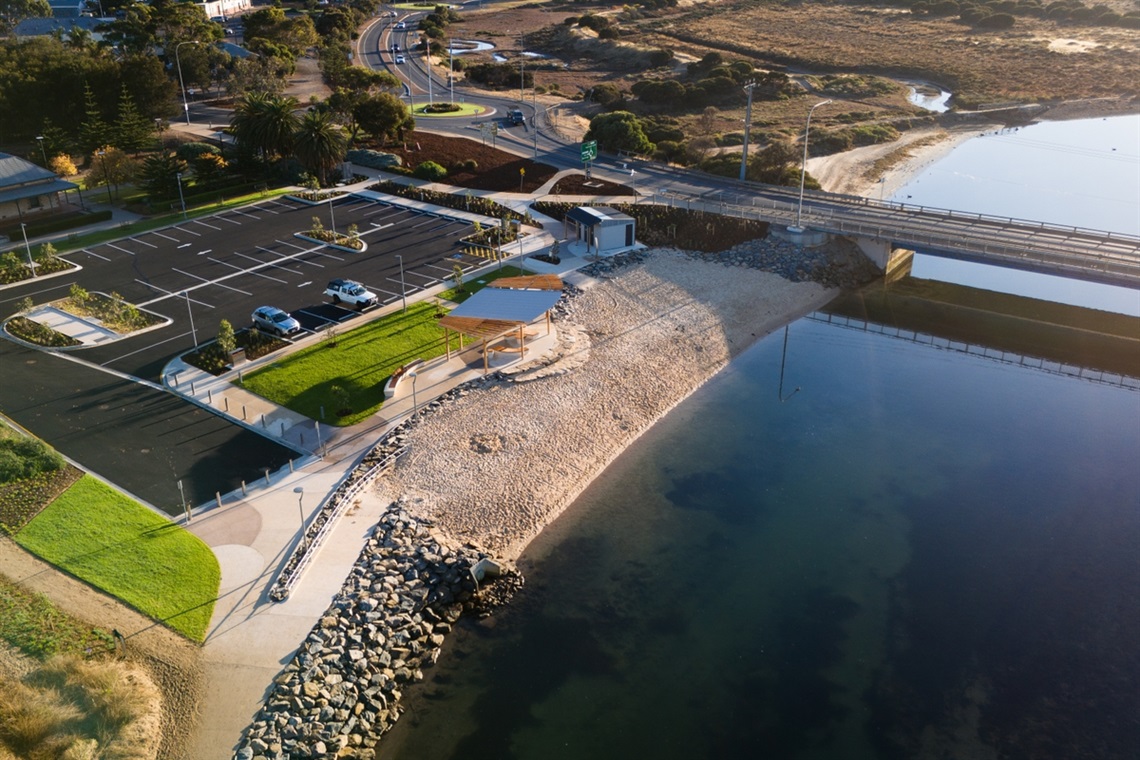
The Wearing Street aquatic precinct in Port Noarlunga – a project that received state and federal government funding. Photo: Harry Vick