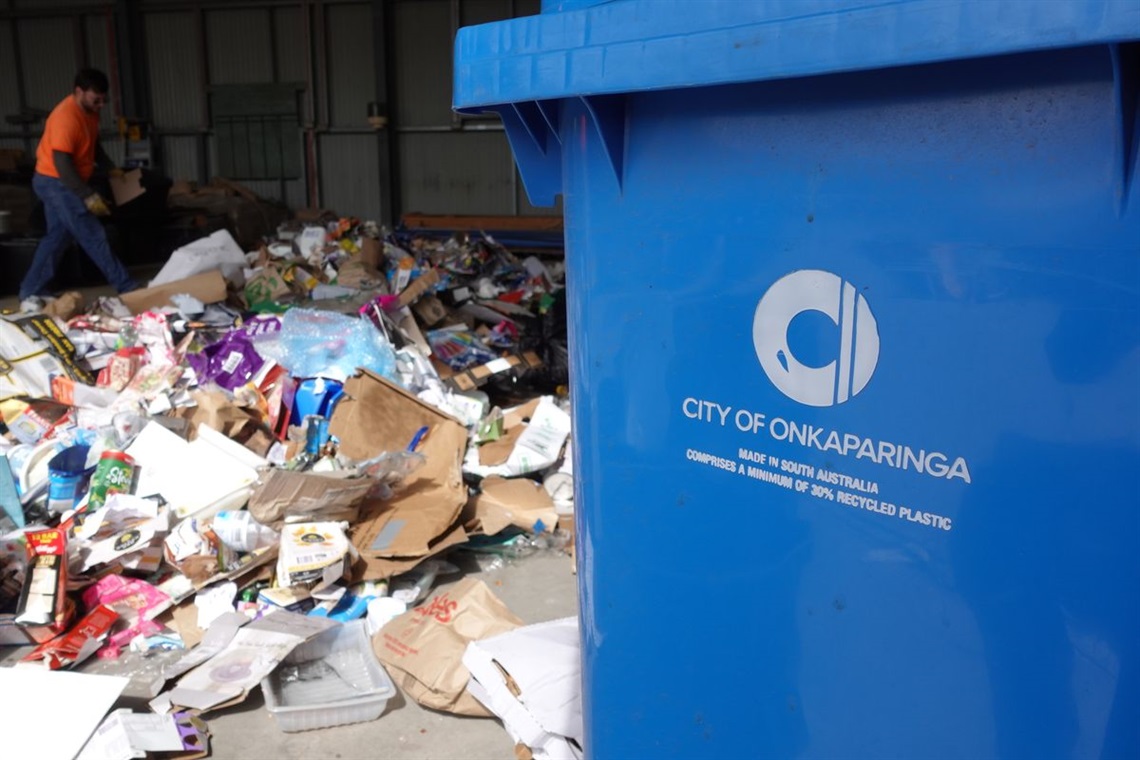
What’s hiding in your red bin?
Published on 11 September 2026
The City of Onkaparinga recently completed a kerbside waste audit, which it does every 3 years or so to see how residents are using their waste, recycling and green organics services.
The audits are done by taking sample loads from Onkaparinga’s kerbside bins to a depot where the waste is sorted into categories and checked for contamination (stuff that’s been put in the wrong bin).
The results are in, so, how did we do?
The good news
Onkaparinga residents continue to make positive progress in recovering valuable resources and reducing reliance on landfill.
Overall, the audit showed that the amount of waste we’re keeping out of landfill increased from 55 per cent in 2022, to 59 per cent in 2025, which reflects improved use of existing waste and recycling services by residents.
A key driver of this improvement has been increased use of the organics service, with the average household now placing 9.2 kilograms of material into their green bin each week, compared to 6.9kg in 2022.
Residents are generally using the organics service correctly, with contamination remaining exceptionally low at just one per cent.
Room for improvement
There’s significant untapped potential for everyone to use the council’s existing waste management system to benefit the community and the environment.
The audit found that average household waste generation increased from 18.2kg in 2022, to 20.5kg in 2025, and that almost 60 per cent of the material currently being placed in landfill bins could be instead recovered through our recycling, organics and diversion programs (such as for e-waste).
Food waste remains the single largest opportunity for improvement. It now accounts for 28.5 per cent of material placed in landfill bins, compared with 19.2 per cent in 2022, when it could’ve instead been put in the green bin to be processed locally into high-grade compost.
Increasing the recovery of food waste through the organics service would reduce disposal costs, support the production of valuable compost and contribute to South Australia's transition towards a circular economy.
Other things that should never be put in your kerbside bins include batteries due to the risk of fires – there are many free drop-off points you can use instead.
You can keep unwanted textiles out of your bin by donating high-quality clothing and recycling poor quality clothing and textiles at the next Set your clothes free event on Saturday 31 October.
Other great events and initiatives to help you declutter and keep unwanted stuff out of landfill include The Great Spring Clean Up, which runs throughout September and October, and the Garage Sale Trail, encouraging the community to buy, sell and reuse across 2 big November weekends.
The council’s audit found that if everyone disposed of everything in the right bin, we could increase the amount of waste we divert from landfill from 59 per cent to 81 per cent, which would save the council – and the community – more than $2 million each year (not to mention recover significantly more valuable resources and reduce environmental impacts).
More information
If you want to brush up on what goes into what bin, the council’s A–Z disposal guide is a great place to start, while the Sustainable Onkaparinga Facebook page posts regular bin tips.